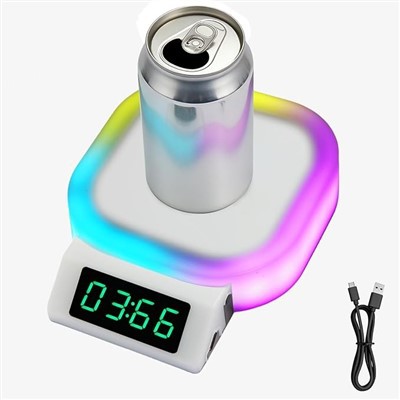







Choosing the right LED digital clock requires considering the following factors:
1. Functional requirements: Consider the required clock display format, alarm clock and timer functions, brightness control requirements, etc. For example, if you need an alarm clock function, you can choose a clock with an alarm function; if you need a timing function, you can choose a clock with a timer.
2. Accuracy and stability: For occasions that require accurate timing, such as shopping mall business hours, school start and end times, etc., you need to choose a high-precision and stable LED digital clock. You can choose a solution with a high-precision clock source, stable time generation technology and temperature compensation.
3. Integration and interfaces: Consider the integration level of the solution and the type of interface required. If you need to connect to other system components, such as I2C, SPI, UART, etc., you need to choose a clock with the corresponding interface. At the same time, choosing a highly integrated solution can simplify system design and layout and reduce circuit board size.
4. Power management and power consumption: LED digital clock requires power supply, so power management and power consumption need to be considered. You can choose a solution with good power management features, low power consumption, and dynamic frequency adjustment to reduce power consumption and extend battery life.
5. Programmability and flexibility: If you need customized settings, such as setting clock format, brightness control, alarm time and trigger conditions, you can choose a solution with good programmability and flexibility.
6. Cost-effectiveness: While meeting needs, cost-effectiveness needs to be considered. You can choose relatively low solutions such as chip price, system design cost and production cost.
7. Reliability and supply chain: Consider the reliability and supply chain situation of the solution. Choose products from reliable suppliers to ensure long-term product supply and technical support.
To sum up, choosing a suitable LED digital clock requires considering factors such as functional requirements, accuracy and stability, integration and interfaces, power management and power consumption, programmability and flexibility, cost-effectiveness, reliability and supply chain. Select according to actual needs to better meet usage requirements.