



Hey there! As a supplier of interval clocks, I often get asked if an interval clock can be used for interval running. Well, let's dive right into it and see how these nifty time - keeping devices can enhance your interval running experience.


First off, what exactly is interval running? It's a type of training where you alternate between short bursts of high - intensity exercise and periods of lower - intensity recovery. For example, you might sprint for 30 seconds and then walk or jog for 60 seconds, and repeat this cycle several times. This kind of training is great for improving your cardiovascular fitness, increasing your speed, and burning calories.
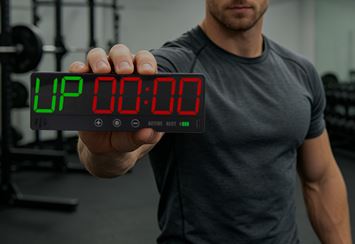
Now, let's talk about interval clocks. An interval clock is designed to help you keep track of different time intervals. It can be set to count up or down, and it can be programmed to have multiple intervals. This makes it a perfect tool for interval running.
One of the biggest advantages of using an interval clock for interval running is that it takes the guesswork out of timing. When you're in the middle of a tough workout, it's easy to lose track of time. With an interval clock, you don't have to worry about constantly checking your watch or trying to estimate how much time has passed. The clock will beep or flash to let you know when it's time to switch from the high - intensity phase to the recovery phase, and vice versa.
Another benefit is that it allows for precise training. You can set the exact duration of each interval according to your training goals. Whether you're a beginner looking to gradually build up your endurance or an experienced runner aiming for a specific speed improvement, an interval clock can be customized to meet your needs.
Let's say you're a beginner. You might start with short intervals, like 15 seconds of sprinting followed by 45 seconds of walking. As you get fitter, you can increase the duration of the sprinting intervals and decrease the recovery time. An interval clock makes it easy to make these adjustments and track your progress over time.
For more advanced runners, an interval clock can be used to simulate race conditions. You can set intervals that mimic the pace and intensity of a race, allowing you to practice your speed and pacing strategies. This can be incredibly valuable in preparing for a big event.
Now, I know some of you might be thinking, "Can't I just use my phone as an interval timer?" Well, while your phone can certainly do the job, an interval clock has some distinct advantages. For one, it's dedicated to the task of timing intervals. You don't have to worry about getting distracted by notifications or other apps on your phone. Also, many interval clocks are designed to be durable and weather - resistant, making them suitable for outdoor running.
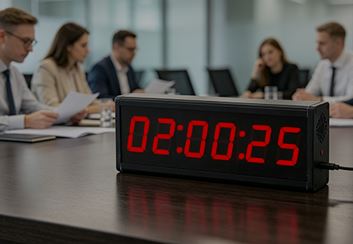
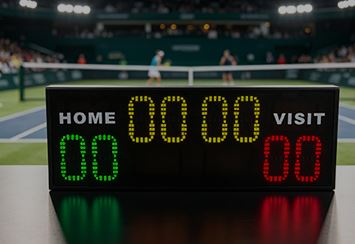
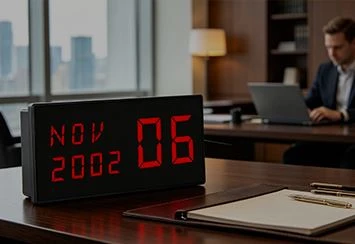
If you're interested in checking out some of the products we offer, we have a Days Hours Minutes Seconds Countdown Clock Timer that can be great for interval running. It has a large digital display, so you can easily see the time from a distance. And if you're looking for something more versatile, our Portable Electronic Scoreboard With Remote can also be used as an interval timer. It's portable and comes with a remote control, which is really convenient.
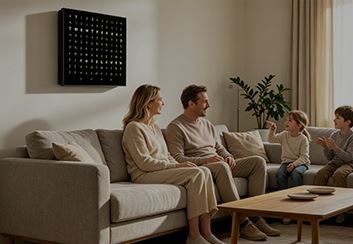
We also have a Small Led Word Clock that might be a bit different but can still add a unique touch to your training. It shows the time in a fun and stylish way, and it can be set to different intervals as well.
In conclusion, an interval clock is a fantastic tool for interval running. It helps you stay on track, train more precisely, and make the most of your workouts. Whether you're a casual runner or a competitive athlete, an interval clock can take your training to the next level.
If you're interested in purchasing an interval clock or have any questions about our products, feel free to reach out. We're here to help you find the perfect time - keeping solution for your interval running needs.
References:
- "Interval Training: A Guide to High - Intensity Workouts" by Fitness Magazine
- "The Science of Interval Running" by Sports Science Journal


